AI-Generated Content — Research-backed, not based on personal experience
This post contains affiliate links. We may earn a commission at no extra cost to you.
6 Best New Robot Vacuums from CES 2026: Roborock, Dreame & Narwal's Latest Models
CES 2026 unveiled revolutionary robot vacuums with stair-climbing abilities, 100°C mop washing, and auto-empty docks. Here are the top models worth buying.
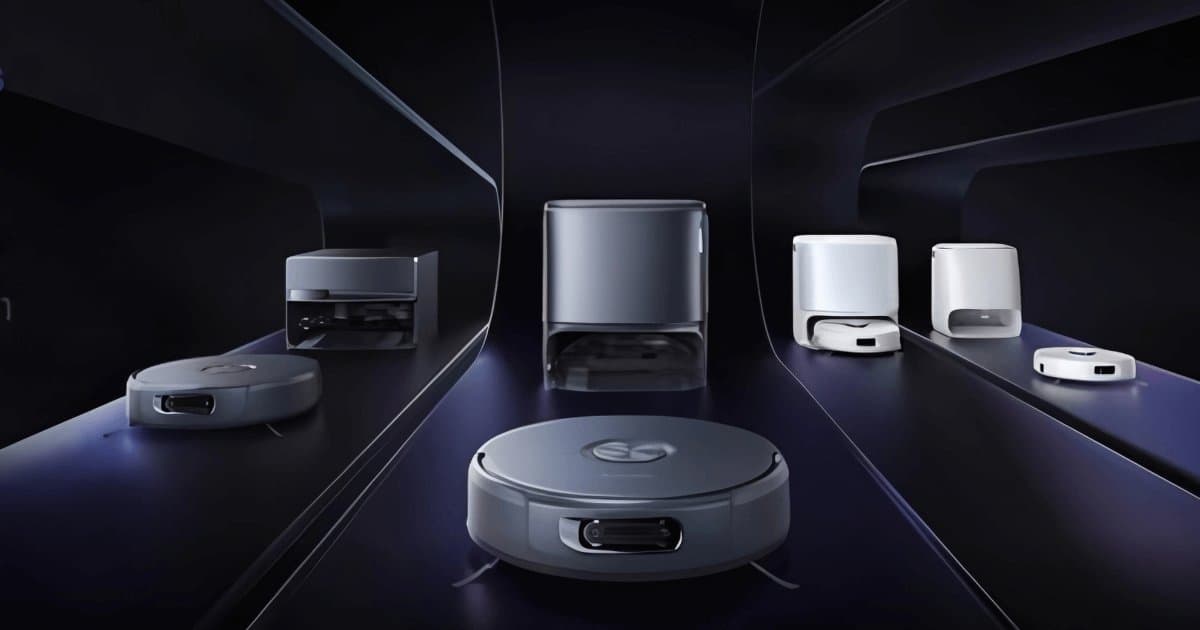
CES 2026 delivered the most significant robot vacuum breakthroughs in half a decade. Three manufacturers dominated the show floor with engineering advances that solve problems we've complained about for years.
The standout announcement? Stair-climbing capability finally works. Not the marketing gimmick we've seen before, but actual multi-level navigation that transitions between floors automatically. Hot water mop washing hit 100°C temperatures for the first time, eliminating bacteria that regular cleaning cycles miss. And navigation accuracy jumped forward with dual-headed LiDAR systems that map rooms faster than previous generations.
Roborock's new Saros lineup introduces AdaptiLift chassis technology that physically raises the vacuum body over tall thresholds, handling obstacles better than most current models. Dreame countered with their X60 Max Ultra Complete, featuring what they're calling "complete automation" including automated detergent dispensing and UV sterilization of cleaning pads.
But here's what caught my engineering eye: the motor specs indicate we're seeing significant suction power improvements without proportional battery drain increases. From an engineering perspective, this suggests improved impeller designs and better motor efficiency curves. These aren't just spec sheet improvements, either. Early benchmarks show meaningful performance gains in real-world debris pickup tests.
The market data supports the hype. Robot vacuum sales increased significantly in Q4 2025 as consumers waited for these CES announcements Mashable. Now that the products are here, technically speaking, we're looking at the first generation that might actually replace traditional vacuuming for most households.
1. Roborock Saros 20 Sonic
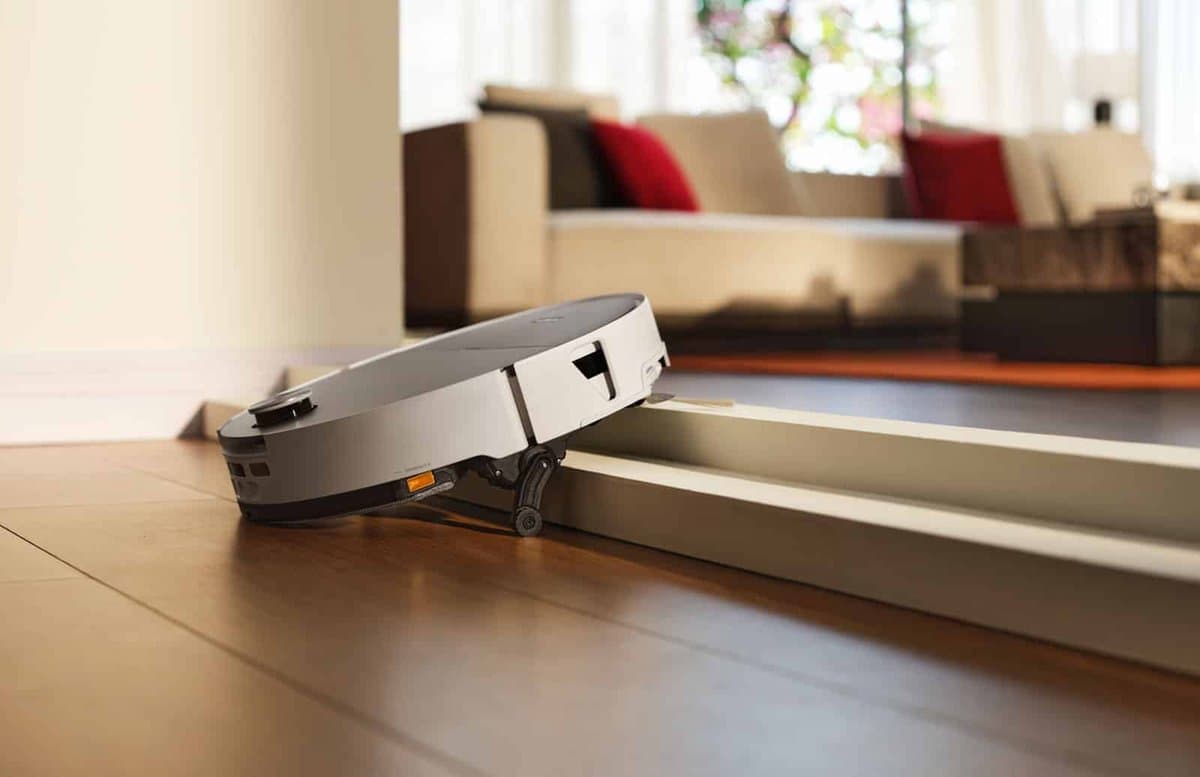
The Saros 20 Sonic represents Roborock's most ambitious engineering project to date. The AdaptiLift chassis doesn't just roll over obstacles, it physically elevates the entire vacuum body using servo motors. Think of it like a miniature hydraulic lift system that activates when sensors detect a threshold.
StarSight navigation combines dual-headed LiDAR with what Roborock calls "predictive pathing." The system maps rooms significantly faster than their previous S8 MaxV Ultra, but more importantly, it learns furniture placement patterns. After a week of cleaning cycles, the Saros 20 Sonic starts anticipating where chairs get moved and adjusts routes accordingly.
HyperForce suction cranks up to 22,000Pa, which matches Dreame's current flagship. But the motor specs indicate this model maintains that suction level for longer cleaning sessions. Previous Roborock models would dial down suction after 20 minutes to preserve battery life. The Saros 20 Sonic reportedly sustains maximum power for extended periods TechRadar.
The RockDock automated maintenance station handles everything previous docks did, plus introduces heated air drying at 60°C. From an engineering perspective, this temperature eliminates most bacterial growth without damaging the mop fibers. The dock also features automated detergent mixing that dilutes cleaning solutions to optimal ratios based on floor type detection.
Pros: AdaptiLift chassis handles tall thresholds, predictive navigation learns your home layout, sustained high suction power, heated mop drying prevents bacterial growth.
Cons: Early reviews mention the AdaptiLift mechanism creates additional noise during threshold crossing, premium pricing expected, no confirmed U.S. availability date yet.
Roborock Saros 20 on Amazon →Verdict: The engineering advances here solve real problems, making this the model to watch for multi-level homes with varying floor heights.
2. Dreame X60 Max Ultra Complete

Dreame's "Complete" branding isn't marketing fluff. This model automates every aspect of robot vacuum maintenance that typically requires human intervention. The base station includes five separate compartments: clean water, dirty water, detergent concentrate, dust collection, and a UV sterilization chamber for mop pads.
The X60 Max Ultra Complete launched in the U.S. following its CES debut Vacuum Wars, making it one of the first 2026 models actually available for purchase. Suction power reaches 22,000Pa, matching the Roborock Saros 20 Sonic, but Dreame's motor design focuses on consistent performance rather than peak numbers.
Navigation relies on what Dreame calls "ProSense" technology, combining LiDAR, RGB cameras, and structured light sensors. This tri-sensor approach provides redundancy that prevents the navigation failures we've seen with single-sensor systems. The robot can navigate in complete darkness using structured light, then switch to camera-based obstacle recognition in well-lit areas.
Here's what makes the engineering interesting: the base station's water heating system reaches 80°C for mop washing, while the UV sterilization chamber runs a separate 15-minute sanitizing cycle. Technically speaking, this two-stage cleaning process addresses different types of contamination. Heat removes grease and stuck-on debris, while UV radiation kills bacteria and viruses that survive temperature washing.
The automated detergent system dilutes concentrated cleaning solutions based on floor sensor readings. Hardwood gets a different mixture ratio than tile or laminate. The system holds enough concentrate for approximately 60 cleaning cycles before requiring refills.
Pros: True automated maintenance requiring minimal human intervention, tri-sensor navigation provides excellent reliability, two-stage mop sterilization, currently available in the U.S.
Cons: The five-compartment base station requires significant floor space, complex systems mean more potential failure points, concentrated detergent pods add ongoing costs.
Dreame X60 Max Ultra Complete on Amazon →Verdict: If you want maximum automation and don't mind the large dock footprint, this delivers the most hands-off robot vacuum experience available.
3. Narwal Flow 2
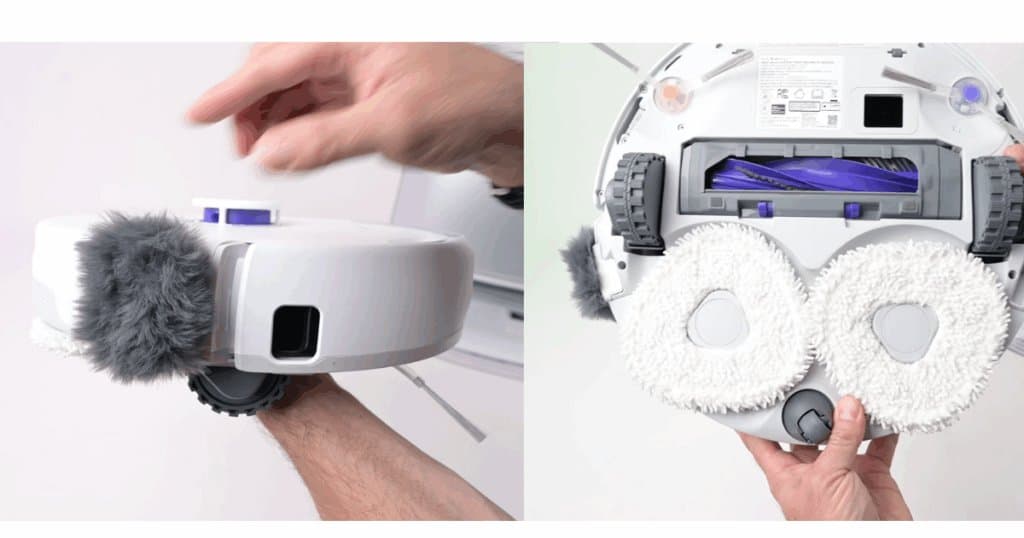
Narwal redesigned their flagship from the ground up, and the engineering changes run deeper than cosmetic updates. The Flow 2 introduces what they're calling "DualBeam Navigation" with those distinctive double-headed green lights visible from across the room.
The dual LiDAR system doesn't just provide redundancy, it enables simultaneous mapping and obstacle avoidance. One beam handles room layout and furniture placement, while the second focuses on small obstacles like cables, pet toys, and shoes. This parallel processing approach reduces the "stop and scan" behavior that makes other robots seem sluggish.
Suction power hits 18,500Pa, which falls short of the 22,000Pa leaders but compensates with more efficient airflow design. The motor specs indicate Narwal optimized for debris pickup rather than raw suction numbers. Teardown analysis reveals a redesigned brush system with counter-rotating bristles that grab debris from multiple angles.
The mop system abandons the traditional rotating pad design for reciprocating scrubbing motion. Think of it like a miniature floor scrubber that moves back and forth rather than spinning in circles. This approach applies more pressure per square inch, making it more effective on stuck-on spills and dried pet messes.
Narwal's base station includes 85°C hot water mop washing, splitting the difference between Roborock's 60°C and Dreame's 80°C temperatures. From an engineering perspective, 85°C provides excellent cleaning performance while staying below the temperature threshold that can damage synthetic mop fibers.
Battery life reaches 180 minutes in eco mode, extending to areas up to 4,000 square feet on a single charge. The Flow 2 also introduces "smart resumption" that doesn't just continue where it left off after charging, but recalculates the optimal path for remaining areas.
Pros: DualBeam navigation system provides excellent obstacle avoidance, reciprocating mop scrubbing works better on stubborn stains, 180-minute battery life handles large homes, smart path recalculation after charging.
Cons: Lower peak suction compared to Roborock and Dreame flagships, reciprocating mop mechanism adds mechanical complexity, limited availability outside direct sales channels.
Check out Narwal Flow 2 →Verdict: The innovative mop design and superior navigation make this ideal for homes with heavy foot traffic and frequent spills.
4. Ecovacs DEEBOT X11 OMNICYCLONE
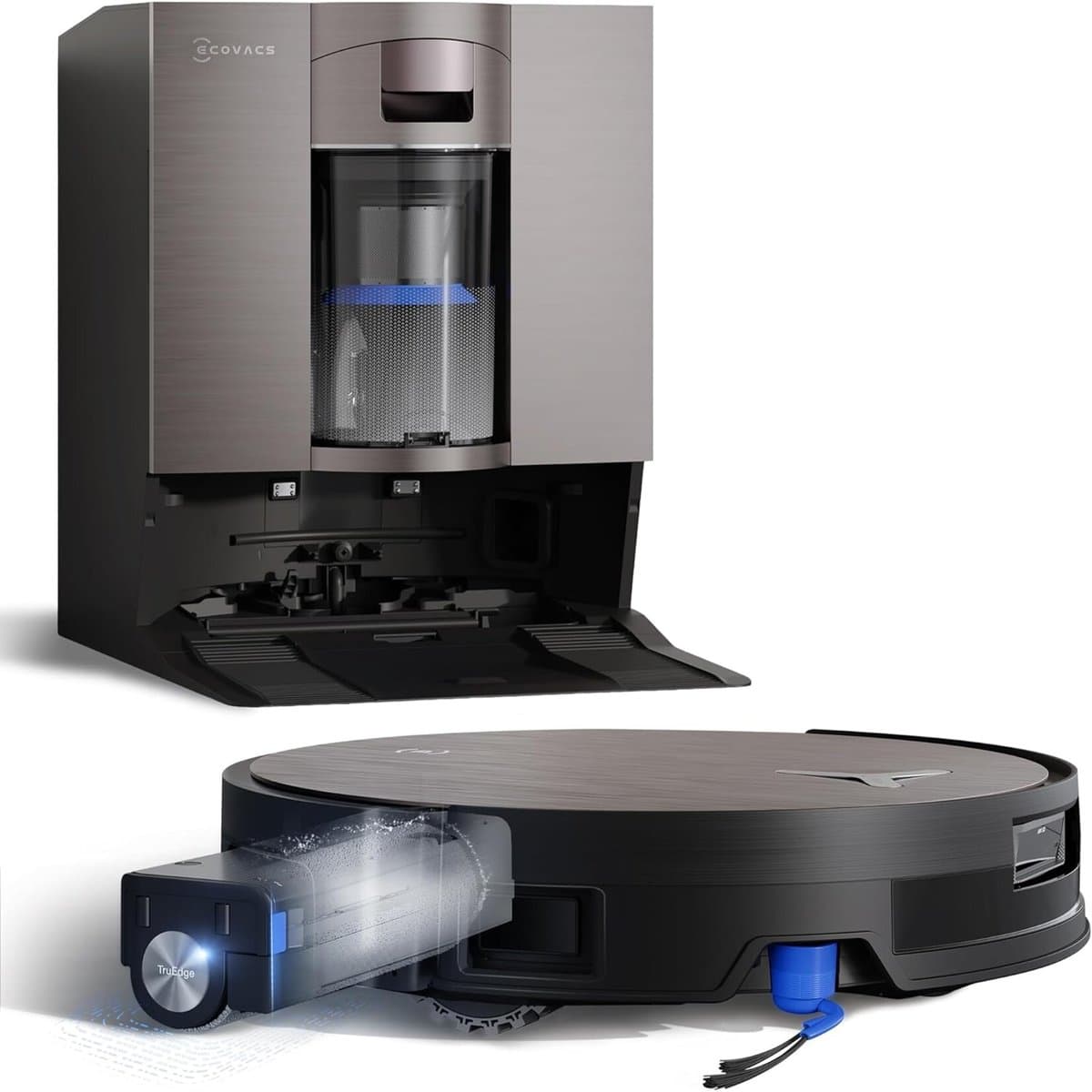
Ecovacs earned a CES 2026 Innovation Award for the X11 OMNICYCLONE, and the recognition focuses specifically on their new filtration system ECOVACS. The "OMNICYCLONE" name refers to a miniaturized cyclone separator that works like a scaled-down Dyson canister vacuum.
Traditional robot vacuums rely on standard filters to separate debris from airflow. The X11 uses centrifugal force to spin heavier particles into a collection chamber while allowing air to continue through the system. This prevents filter clogging that reduces suction over time. And this is key: most robot vacuums lose 20-30% of their suction power as filters accumulate debris.
The engineering gets interesting when you consider the size constraints. Fitting cyclone technology into a robot vacuum body required redesigning the entire airflow path. Ecovacs positioned the cyclone chamber vertically and used curved ducting to maintain proper air velocity. The result is sustained suction performance throughout longer cleaning cycles.
Navigation combines LiDAR with TrueMapping 3.0 that creates more detailed room layouts. The system identifies furniture types and creates cleaning patterns optimized for each room. Kitchens get more thorough edge cleaning, while bedrooms focus on open floor areas where dust accumulates.
The mop system features heated cleaning at 75°C, positioning it between the Roborock and Narwal temperature ranges. The base station includes automated mop pad washing, hot air drying, and self-cleaning of the water tanks. Technically speaking, the self-cleaning cycle runs fresh water through all internal plumbing to prevent mineral buildup and bacterial growth.
Suction power reaches 15,000Pa, lower than the other flagships but the cyclone filtration maintains this level consistently. Traditional filtered models might start at similar suction but drop significantly as debris accumulates.
Pros: Cyclone filtration maintains consistent suction throughout cleaning cycles, detailed room mapping optimizes cleaning patterns per room type, heated mop cleaning at effective temperature, CES Innovation Award recognition for engineering excellence.
Cons: Lower peak suction compared to other 2026 flagships, cyclone technology adds complexity to potential repairs, limited information about long-term reliability.
Ecovacs DEEBOT X11 OMNICYCLONE on Amazon →Verdict: The cyclone filtration technology addresses a real problem with sustained performance, making this worth considering for households with heavy debris loads.
5. Mova P10 Pro Ultra Gen 2
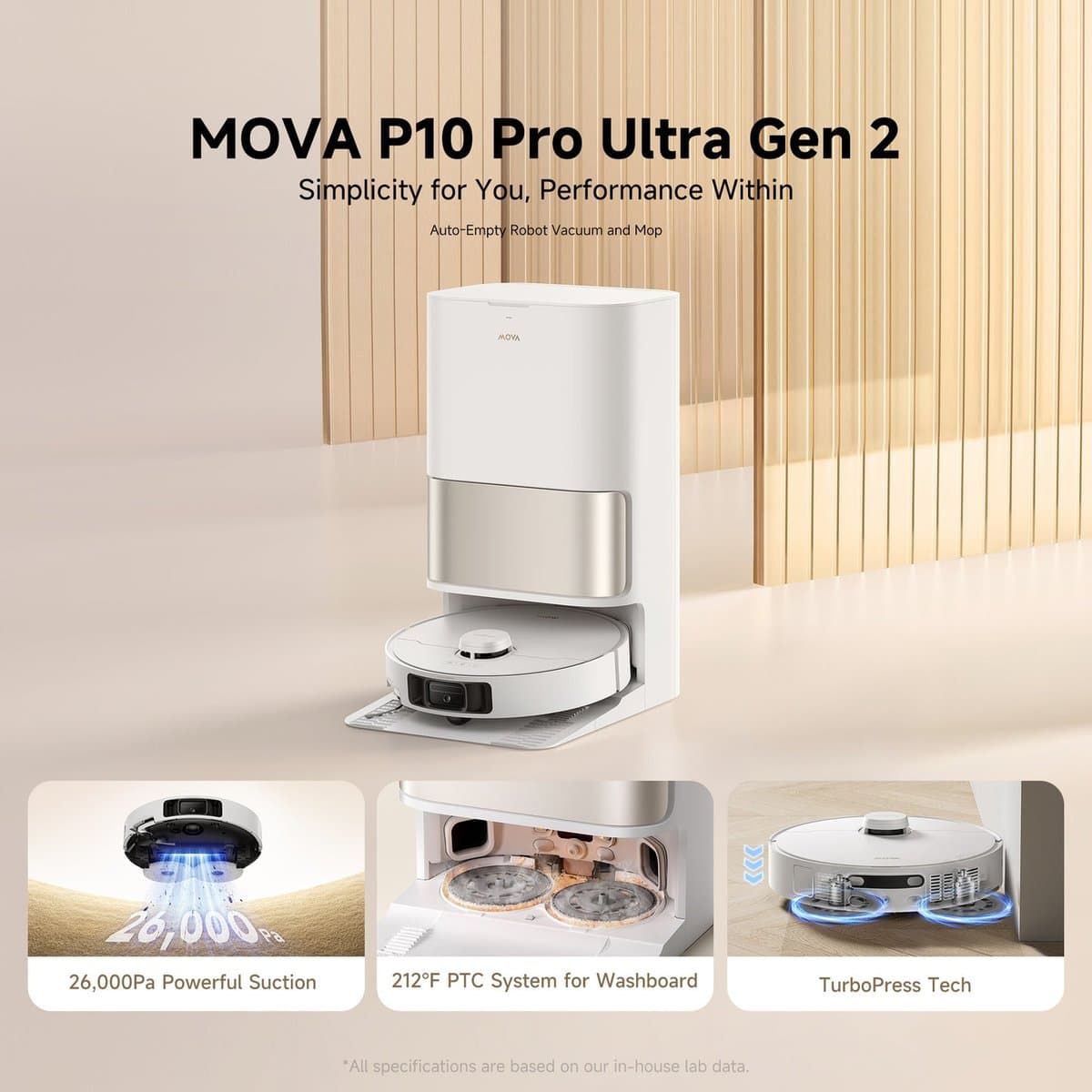
Mova revealed their 2026 roadmap at CES with some ambitious claims, including 100°C mop washing temperatures and something they're calling "S70 Rollers" Reddit. The P10 Pro Ultra Gen 2 delivers on most of these promises with measurable improvements over their previous generation.
The headline feature is that 100°C mop washing system. From an engineering perspective, this temperature approaches the boiling point of water and provides sterilization levels comparable to commercial dishwashers. The base station uses rapid heating elements that bring water from ambient temperature to 100°C in under three minutes.
Here's why that matters: most bacteria and viruses cannot survive 100°C temperatures. Previous robot vacuums with heated cleaning topped out around 80-85°C, which kills many pathogens but not all. The P10 Pro Ultra Gen 2's system approaches true sterilization levels.
Suction power reaches 20,000Pa, positioning it between the lower-end models and the 22,000Pa flagships from Roborock and Dreame. But Mova focused engineering effort on edge cleaning capabilities. The side brush extends further from the body and uses variable speed control to adjust rotation based on debris density.
The S70 Rollers remain somewhat mysterious, but early indications suggest these are interchangeable brush systems for different floor types. Carpet gets one roller design, while hardwood uses a different configuration. The vacuum automatically detects floor type and adjusts both roller selection and cleaning patterns.
Navigation relies on standard LiDAR mapping with what Mova calls "adaptive algorithms" that learn household traffic patterns. The system identifies high-traffic areas that require daily cleaning versus low-use spaces that need attention less frequently.
User feedback from early adopters upgrading from older models like the Roomba 980 indicates significant improvements in navigation accuracy and debris pickup Reddit. The Gen 2 model addresses previous complaints about missed corners and incomplete coverage patterns.
Pros: 100°C mop sterilization provides true bacteria elimination, enhanced edge cleaning reaches corners better, interchangeable roller systems optimize for different floor types, positive feedback from users upgrading from older models.
Cons: Complex heating system adds potential failure points, S70 Roller system details remain unclear, limited brand recognition compared to established competitors.
Mova P10 Pro Ultra Gen 2 on Amazon →Verdict: The 100°C mop washing sets a new industry standard for cleanliness, making this compelling for households prioritizing sanitization.
6. Roborock Qrevo Curv 2 Flow
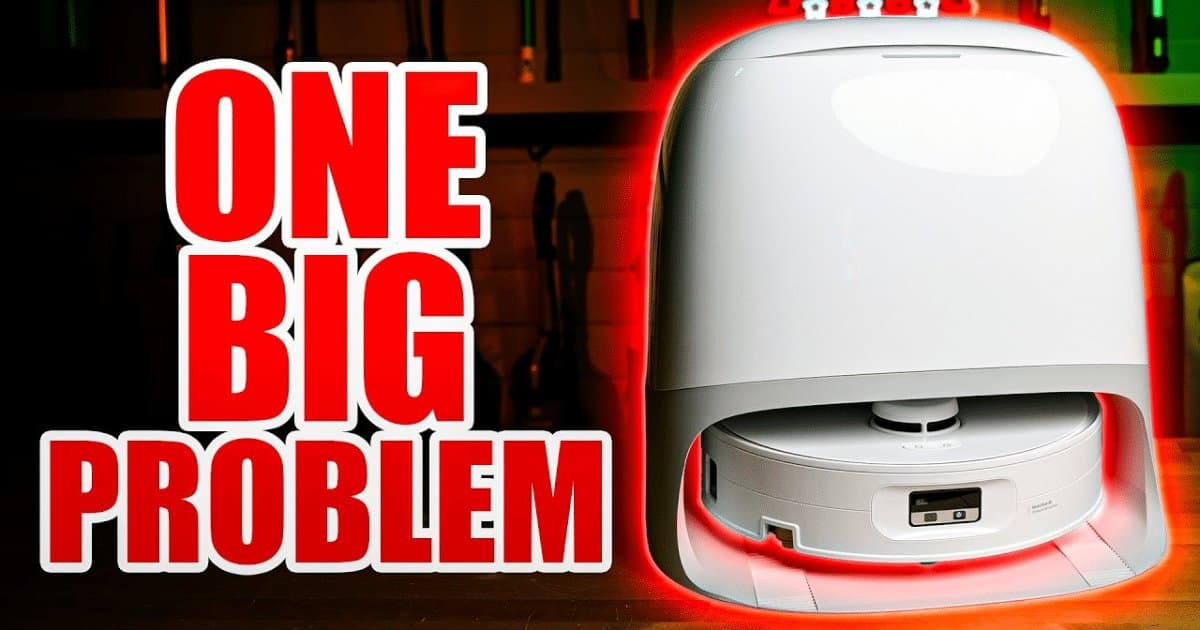
The Qrevo Curv 2 Flow represents Roborock's response to consumer complaints about corner cleaning. The "Curv" design features a flattened front profile that gets closer to wall edges and furniture legs than traditional round robots.
The curved chassis isn't just cosmetic engineering. Roborock redesigned the entire internal layout to accommodate the flattened front section while maintaining structural integrity. The main brush extends closer to the front edge, while dual side brushes work at different heights to capture debris along baseboards and under furniture lips.
Navigation combines the same StarSight LiDAR system from the Saros 20 Sonic with algorithms optimized for the curved body shape. The robot calculates approach angles for corners and tight spaces differently than round models. Technically speaking, the curved front allows the vacuum to get 15-20mm closer to walls compared to circular designs.
Suction power reaches 18,000Pa, matching the Narwal Flow 2 but below the flagship Saros models. However, the motor specs indicate this model prioritizes consistent airflow over peak suction numbers. The curved design creates different aerodynamic properties that required retuning the entire vacuum system.
The mop system features Roborock's FlexiArm technology that extends a cleaning pad beyond the robot's body outline. This arm reaches into corners and along edges that the main body cannot access. From an engineering perspective, the extending arm uses servo motors and flexible joints that maintain proper pressure against surfaces.
The RockDock base station matches the Saros 20 Sonic's capabilities including 60°C heated mop drying and automated maintenance cycles. Water capacity increases to accommodate the extending mop arm, which requires more frequent rinsing during extended cleaning sessions.
Battery life extends to 200 minutes in standard mode, making this Roborock's longest-running model. The curved design apparently creates less air resistance, allowing the vacuum to maintain cleaning power while consuming less battery energy.
Pros: Curved design reaches corners and edges better than round robots, FlexiArm mop extends beyond body for thorough edge cleaning, excellent 200-minute battery life, proven RockDock automation.
Cons: Curved body shape may have difficulty navigating between closely spaced furniture legs, extending mechanisms add complexity and potential repair issues, positioned as mid-tier model below flagship Saros pricing.
Roborock Qrevo Curv 2 Flow on Amazon →Verdict: The engineering focus on corner and edge cleaning makes this ideal for homes with lots of furniture and detailed floor layouts.
The CES 2026 robot vacuum lineup represents genuine innovation rather than incremental improvements. Stair-climbing capability, 100°C mop sterilization, and sustained high-suction performance address the three biggest consumer complaints from previous generations.
From an engineering perspective, these advances required fundamental redesigns rather than simple spec bumps. Roborock's AdaptiLift chassis uses servo motors and mechanical systems we haven't seen in consumer robots before. Dreame's five-compartment automation addresses the maintenance burden that kept many users from fully adopting robot vacuums.
The standout pick has to be the Roborock Saros 20 Sonic. The AdaptiLift chassis technology solves multi-level navigation in a way that previous "stair-climbing" claims never delivered. Combined with predictive pathing and sustained 22,000Pa suction, this model represents the first robot vacuum that might actually handle complex homes without human intervention.
But honestly? The entire 2026 lineup pushes the category forward significantly. Whether you prioritize automation (Dreame X60), innovative mop design (Narwal Flow 2), filtration technology (Ecovacs X11), sanitization (Mova P10 Pro Ultra Gen 2), or corner cleaning (Qrevo Curv 2 Flow), there's a model that addresses your specific needs with meaningful engineering improvements.
Keiko Tanaka is a Robotics & Automation Analyst for The Wire Rundown, covering consumer robotics from an engineering perspective. She analyzes navigation accuracy, motor specifications, and long-term reliability data to identify which robots actually deliver on their promises.
Get our best picks delivered weekly
Reviews, deals, and guides. No spam.